
Rodent Removal in Sacramento, CA
Roof rats come off the street trees and the backyard citrus and into the attic, and you hear them once the house goes quiet. Licensed contractors trap them out, close the way in, and clear what is left.
- Free inspection, itemized quote
- Phone answered 24 hours
- SPCB Branch 2 contractors
What is making the noise
Five or six things account for almost every call here, and where you hear it plus what time of night narrows it before anyone drives out.
-
Roof rats
The rat that dominates Sacramento structures. It climbs, so the mature street canopy and the fruit trees in back yards hand it the roof. UC IPM describes roof rats living in attics, wall voids, ceiling voids and cabinets, and eating citrus on the tree so the rind hangs there hollowed out. Activity is after dark, overhead.
-
Norway rats
The heavier ground species, living at grade and below it. Locally they work the Sacramento and American River levees and move into garages and crawl spaces, hardest from fall through spring when winter rain floods the riverside burrows. UC IPM gives a nightly range of 100 to 500 feet around the nest.
-
House mice
Garages, wall voids and kitchen cabinets, with droppings well under a quarter inch. UC IPM notes a mouse will squeeze under a quarter-inch gap and through an opening three-eighths of an inch wide, and seldom travels more than 30 feet from its nest, which is why the traps go close to the sign.
-
Squirrels
Footfalls in daylight, heaviest at first light and again toward dusk, usually mean a squirrel above the ceiling. The openings overlap with a rat, so one sealed roofline handles both, though the trapping rules differ: the Department of Fish and Wildlife exempts rats and mice from the trapping license, and squirrels stay inside it.
-
Something dead in a cavity
A heavy sweet odor that builds over a week or two and then fades is a carcass inside a wall or a floor. The EPA describes most rodenticides as anticoagulants, with death following four days to two weeks after an animal starts feeding, and it dies wherever it has been living.
-
A wet winter pushing them indoors
Rodents here do not hibernate. Activity moves inside as the nights cool and the rain starts, roughly September through February, and heavy rain on the river levees displaces ground rats into the nearest garage or crawl space. River Park, Campus Commons and West Sacramento see that pattern most plainly.
Why the age of the house sets the whole job
Sacramento rodent work divides along build era. East Sacramento, Midtown, Land Park, Curtis Park, Oak Park and Del Paso Heights are dominated by homes put up before 1975, many of them Craftsman bungalows and Tudor Revivals now 70 to 100 years old with their original foundations and roofs. Houses of that age usually sit on a raised foundation over a ventilated crawl space, under a ventilated attic, which means the openings run from the soil to the ridge: foundation vents, the crawl space access door, gable vents, the gaps where an eave meets a wall, and every pipe that passes through the floor.
Natomas, the southern edge of the city and the Elk Grove tracts are the newest stock and predominantly slab-on-grade. There is no underside to occupy, so everything concentrates overhead at the roof returns, the gable vents, the HVAC penetrations and the corners of the garage door. It is a shorter list, and a faster job when it is done properly.
Over both sits the canopy. The city counts roughly a million trees and about 19 percent canopy cover in its urban forest plan, with a target of 35 percent by 2045, and the City of Trees name goes back to the 1850s. Shade like that is the reason roof rats dominate here: a branch touching a ridge is a bridge, and a backyard orange or lemon is a food supply that holds a population on the block whether or not your own house is open.
Why route the call through this line
Three things decide whether a rodent job finishes or runs all winter.
The openings get closed, or the trapping never ends
Sacramento splits into two kinds of house. The pre-1975 stock in East Sacramento, Midtown, Land Park, Curtis Park and Oak Park usually sits on a raised foundation, so foundation vents, the crawl space door, gable vents, eave gaps and plumbing penetrations are all on the list. The Natomas and south county tracts are slab-on-grade, which pushes everything overhead. Sealing is quoted on every job we route, and the order is planned before a single trap goes down.
UC IPM puts the gap a young rat can pass under a door at half an inch.
No anticoagulant bait, because California stopped it
Assembly Bill 1788 suspended second-generation anticoagulant rodenticides statewide in 2020, AB 1322 added diphacinone from January 2024, and the Poison-Free Wildlife Act extended the suspension to chlorophacinone and warfarin from January 2025. UC IPM lists bromethalin, cholecalciferol and zinc phosphide as the actives still registered here. Trapping paired with sealing is what a professional crew uses on a Sacramento house, and that is a matter of law rather than preference.
AB 2552, the Poison-Free Wildlife Act, signed September 2024.
Prices printed before anyone knocks on the door
Nobody ranking for rodent work in this city prints a figure. The bands on these pages are national, from the HomeGuide 2026 guides and Angi, because California publishes no city-level rodent cost survey and inventing a Sacramento average would be dishonest. A homeowner who already knows the shape of the numbers can read a quote properly, and the free inspection is what turns a band into separate lines for trapping, sealing and cleanup.
HomeGuide 2026 puts trapping and removal at $250 to $1,200 nationally.
Book the free inspection tonight
Somebody answers at any hour. Tell them what you hear, where in the house, and how long it has gone on, and a licensed contractor is lined up for a free walk of the roofline, the attic and the crawl space.
The figures that decide how a job goes
Four sourced numbers, because the size of a gap and the speed of a litter are why trapping on its own keeps failing.
- 1/2 in Gap a young rat passes under a door UC IPM Pest Notes
- 300 ft How far a roof rat will travel to feed UC IPM Pest Notes
- 3 to 5 Litters a year per female, up to 8 young each UC IPM Pest Notes
- $250 to $1,200 Trapping and removal, national band HomeGuide 2026
Mice, squirrels, or something else
How the signs differ between the two.
Video: Signs of Mice vs. Squirrels In Your Attic, from Skedaddle Humane Wildlife Control.
How a Sacramento rodent job runs
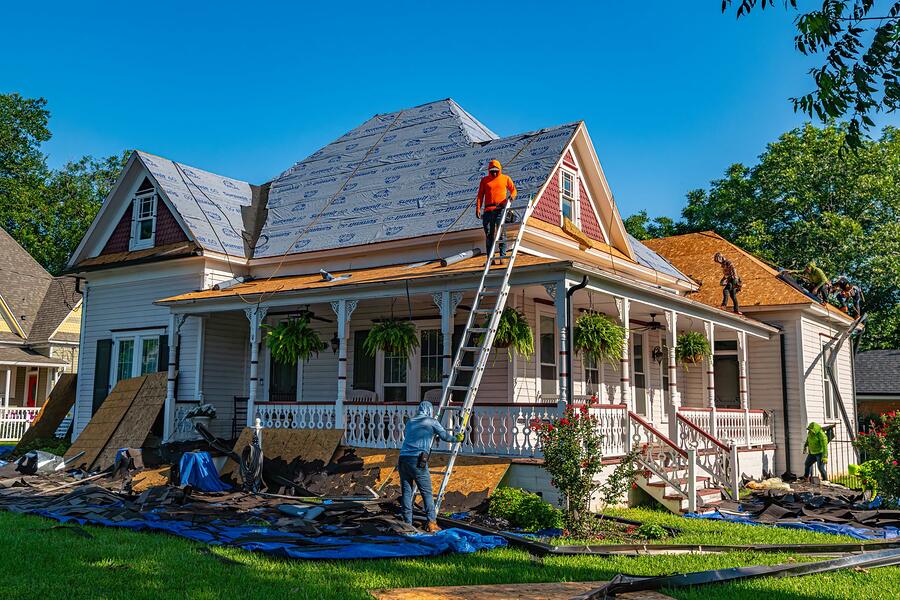
The same order on every call, with the sealing planned at the start, because a house full of rats and a house with open vents both defeat trapping.
-
Call and describe it
Where the noise is, what time of night, how long it has gone on, and anything you have found. That narrows the species before a truck moves.
-
The free inspection
Roofline, attic, crawl space or slab edge, garage and the trees and fruit in the yard, with every opening recorded and photographed and an itemized quote written from it.
-
Close what is not in use
Half-inch hardware cloth, sheet metal and coarse steel wool go over the openings with no current traffic, which leaves the active runs as the only way out.
-
Trap the animals inside
Snap traps along the runs, spaced 10 to 20 feet apart as UC IPM advises, left baited and unset at first where the animals are wary, then checked and reset.
-
Close the rest and clear up
Once the catching stops the last runs are sealed, and the attic is cleared, sanitized or re-insulated where the condition calls for it.
Ready to start? Call (916) 644-8455 or Book a Free Inspection.
A call that comes in most weeks
The situation: A 1920s bungalow on a shaded street in East Sacramento, scratching over the back bedroom every night since the first cool week of October, and a navel orange found under the tree with the inside eaten out of it. The homeowner has stopped sleeping properly and has been told by two people that it is probably squirrels.
What gets done: The inspection starts outside and finds a foundation vent with the screen rusted through, a gap where the eave meets the wall above the porch roof, and a limb resting on the ridge. The vent is rescreened in half-inch hardware cloth that day, traps go into the attic runs 10 to 20 feet apart, and the eave gap stays open until the traps stop producing.
How it turns out: Three visits across about two and a half weeks, an itemized quote with trapping and sealing on separate lines, and a note to get the limb cut back off the roof. The noise goes quiet in the first week and stays that way.
Which service fits the call
Most jobs use two or three of these in sequence, and each page carries the published band for that stage.
-
Trapping, by species
Roof rats in the attic, Norway rats under the floor and house mice in the cabinets are three different trap plans. HomeGuide 2026 puts trapping and removal nationally at $250 to $1,200.
-
Sealing the building
Foundation vents, crawl space doors, gable vents, eave gaps and penetrations, in half-inch steel mesh and sheet metal. Full-home sealing runs $500 to $2,500 on the HomeGuide national figures.
-
The free inspection
A walk of the roofline, attic, underfloor and yard that records the openings and sets the order of work. A standalone inspection is priced nationally at $0 to $175; through this line it costs nothing.
-
Attic cleanup
Droppings and soiled material cleared and the surfaces sanitized, wetted first rather than swept dry, which is what CDPH advises. HomeGuide puts cleanup and decontamination at $600 to $2,500.
-
Insulation replacement
The Department of Energy notes that compressed insulation fails to deliver its rated R-value and that wet insulation performs poorly, which is what urine and runs do to it. Removal and replacement runs $2.50 to $5.50 a square foot.
-
A carcass in a wall
Tracing the odor to the cavity, cutting an access, removing the animal and closing the route it used. HomeGuide prices dead rodent removal at $150 to $500.
Where contractors are dispatched
Sacramento and the metro around it, across Sacramento, Placer, Yolo and El Dorado counties. The neighborhoods and towns below have their own pages because the housing changes what the job looks like.
What Sacramento callers ask first
Plain answers to the questions that come up on nearly every call.
How long does it take to get rid of rats?
Longer than a cheap quote suggests. HomeGuide gives two to three days where only a handful of animals are involved, and one to two months where the infestation is severe. Sealing is what shortens the back half of that, because once the openings are closed the trapping has an end point rather than a stream of replacements. Accounts of four months with nothing to show almost always describe traps with no sealing behind them.
Is it roof rats or mice in the attic?
In Sacramento it is roof rats far more often. Noise overhead after dark, droppings around a quarter to half an inch long, and greasy rub marks along the joists are the roof rat pattern UC IPM describes, along with hollowed citrus left hanging on the tree. Droppings clearly under a quarter inch, activity inside cabinets and noise at floor level point to house mice instead.
Is poison allowed in California now?
Anticoagulant baits are restricted, and the other registered actives remain legal. AB 1788 suspended second-generation anticoagulants statewide in 2020, AB 1322 added diphacinone from 2024, and the Poison-Free Wildlife Act extended the suspension to chlorophacinone and warfarin from January 2025. UC IPM lists bromethalin, cholecalciferol and zinc phosphide as still registered. On a house with people and pets in it, the contractors routed through this line trap and seal.
What keeps rodents out for good?
A closed building. Ultrasonic plugs, repellent granules and bait stations leave the opening exactly as it was, and UC IPM has roof rats traveling up to 300 feet or more to feed, so a fruit tree three houses away keeps the pressure on indefinitely. Half-inch hardware cloth over the vents, sheet metal at the chewed edges and a properly fitted crawl space door are what hold.
Who turns up, and what license do they hold?
An independent Sacramento-area contractor registered with the California Structural Pest Control Board and licensed in Branch 2, which is the category covering household pests and rodents. Ask whoever attends for the company registration and check it on the Board lookup before work starts. Wood repair that goes beyond mesh and sealant moves into Branch 3 or a licensed building contractor.