
Rodent Removal in Oak Park
Oak Park holds some of the oldest housing in Sacramento, much of it on original foundations with original vent screens. The openings are predictable here, and counting them is most of the work.
- Sacramento's earliest suburb
- Original foundation vents
- Free inspection, itemized quote
The oldest housing stock in the city
Oak Park was developed as one of Sacramento's first streetcar suburbs at the end of the nineteenth century, and the surviving stock reflects it: Victorians, early bungalows and small Craftsman houses, a good many of them over a century old. Houses of that era sit on a raised foundation over a ventilated crawl space, and in Oak Park the foundations and vent screens are very often the originals.
That age profile produces a consistent list. Foundation vents with screens rusted through across a whole panel rather than at one corner. Crawl space doors that no longer fit their frames, or that were replaced with plywood at some point and have since rotted at the bottom edge. Skirting gaps where a porch meets the ground. Plumbing penetrations opened up during a remodel and never closed.
Many houses here have been renovated in recent years, which cuts both ways. A good renovation closes openings as a side effect of doing the work properly. A quick one adds new service penetrations and leaves them unsealed, and those are the ones that turn up on an inspection.
Trees, fruit and what sits against the foundation
The street canopy here is mature and the gardens are long-established, which gives both rat species what they want. The city urban forest plan counts roughly a million trees and about 19 percent canopy cover across Sacramento, with 35 percent targeted by 2045, and the older south-central neighborhoods carry a substantial share.
Fruit is the local detail that matters. Older Sacramento gardens very commonly have a citrus tree, and UC IPM notes that roof rats eat citrus and avocados on the tree and leave hollowed-out rinds hanging, which is the clearest sign available without going into an attic. Windfall on the ground does the same job for a ground rat.
At foundation level the conditions are about cover rather than food. Sheds sitting on bare soil, decking with an open skirt, woodpiles and overgrown planting against a wall all give an animal somewhere to work unobserved, a few inches from a vent that has already failed. Clearing a band of ground around the building is free and it changes what the inspection finds next time.
What a visit in Oak Park looks like
The foundation comes first and takes the longest. Each vent is counted and its screen checked panel by panel, the crawl space door is opened and its fit assessed, the skirting line is followed round, and any recent service penetrations are found. Then the roofline and the attic, then the trees and the garden cover.
Trapping follows whichever level the evidence points to, and on a house of this age it is quite often both. Snap traps go along the runs at 10 to 20 foot spacing as UC IPM advises. The quiet openings close on the first visit in half-inch hardware cloth and sheet metal, and the active ones close once two checks in a row come up empty.
These streets most often need rodent exclusion alongside roof rat removal, with Norway rat removal where the activity is underneath. The about page sets out who attends and the registration to check.

Rat holes around a building
What a burrow looks like, and where it leads.
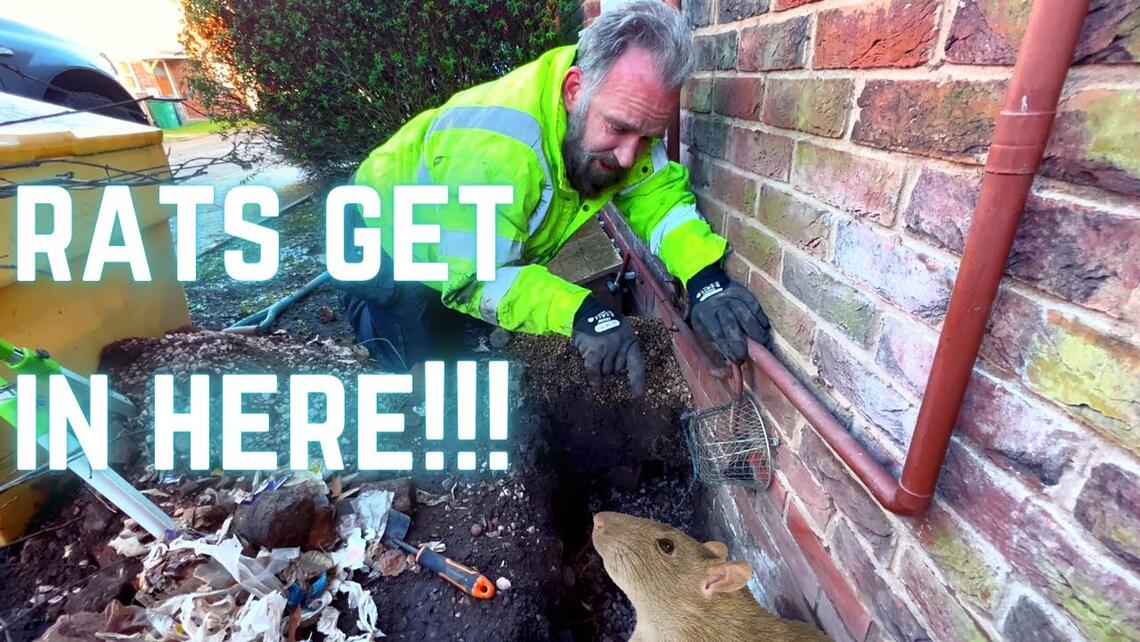
Video: RAT holes around your house? How to stop rats burrowing, from Pest Interceptors.
What an Oak Park job turns on
Three things that shape the work on housing this old.
Every vent gets counted
A century-old house may have six or eight foundation vents, and on a quote that matters, because sealing is priced per opening. A survey that records four where there are eight produces a cheap quote and a job that does not hold. Asking to be walked round the building with the list is the simplest check available to a homeowner.
Half-inch mesh in 16 or 18 gauge is the hardware cloth standard UC IPM gives for rat work.
Recent work gets checked as carefully as old work
New openings are as useful to a rat as old ones. A remodel, a new service line, a replaced water heater or an added bathroom each leaves a penetration, and the ones done quickly tend to leave them open. The inspection reads the recent alterations as closely as the original fabric, because those are the entries nobody expects.
UC IPM has a mouse through an opening three-eighths of an inch wide and a rat under a half-inch gap.
Citrus on the tree is the clearest early sign
An orange or a lemon with the inside eaten out and the peel still hanging on the branch is a roof rat and nothing else. In a neighborhood of long-established gardens that sign often appears weeks before anyone hears movement, which makes it the cheapest warning available. Windfall cleared off the ground removes a ground-level supply at the same time.
UC IPM records roof rats hollowing citrus on the tree and leaving the rind in place.
A typical Oak Park call
The situation: A 1912 bungalow near Broadway, renovated two years earlier. Movement in the ceiling of the back room after dark from late September, and a lemon found on the tree with the inside gone. The owner had assumed a renovated house was a sealed house.
What gets done: The walk counts seven foundation vents, four with screens failed across a full panel, and finds two penetrations cut during the renovation that were never closed: a condensate line through the foundation wall and a cable entry behind the meter. On the roof, a gable vent with its louvers gone brittle and a limb within a few inches of the rear ridge. In the attic, rub marks along one perimeter joist and droppings in two bays.
How it turns out: Three visits across about three weeks. The four vents, the two renovation penetrations and the cable entry are closed on the first visit, traps work the attic run, and the gable vent is rescreened once the checks come up empty. The droppings are wetted and cleared, and the owner books a tree service for the limb. Sealing, trapping and the attic clearance were priced separately.
Oak Park questions
What callers from these streets ask.
My house was renovated. Why is this happening?
Because renovations add openings as well as closing them. A new condensate line, a cable entry, a relocated water heater or an added bathroom each leaves a penetration through the building envelope, and on a quick job those are rarely sealed. UC IPM has a young rat passing under a half-inch gap, so the clearance left around a pipe is enough. A survey reads the recent work as carefully as the original fabric for exactly this reason.
How many openings should I expect on a house this old?
More than you would guess, and it says nothing bad about the property. A hundred-year-old raised-foundation house commonly has six to eight foundation vents, a crawl space door, several underfloor penetrations and two or three roofline items, so a list of ten or twelve is normal. What matters is that each is listed individually with the closure proposed, because that list is what any guarantee has to refer back to.
Is the landlord or the tenant responsible?
Structural sealing is generally a landlord matter, since it is work on the building, while housekeeping and waste are usually the tenant's. Where a rodent complaint cannot be resolved between the parties, Sacramento County Environmental Management inspects rodent complaints and can issue abatement notices. A dated written inspection report is the document that makes either conversation shorter, and that is covered under clearance letters.
How soon can somebody come out?
Calls go to a person at any hour of the night, and inspection slots sit between 7am and 7pm daily. The dispatcher books the next slot the contractor covering Oak Park has free. The visit costs nothing and you keep the opening list whatever you decide afterward.