Rodent Removal in El Dorado Hills, CA
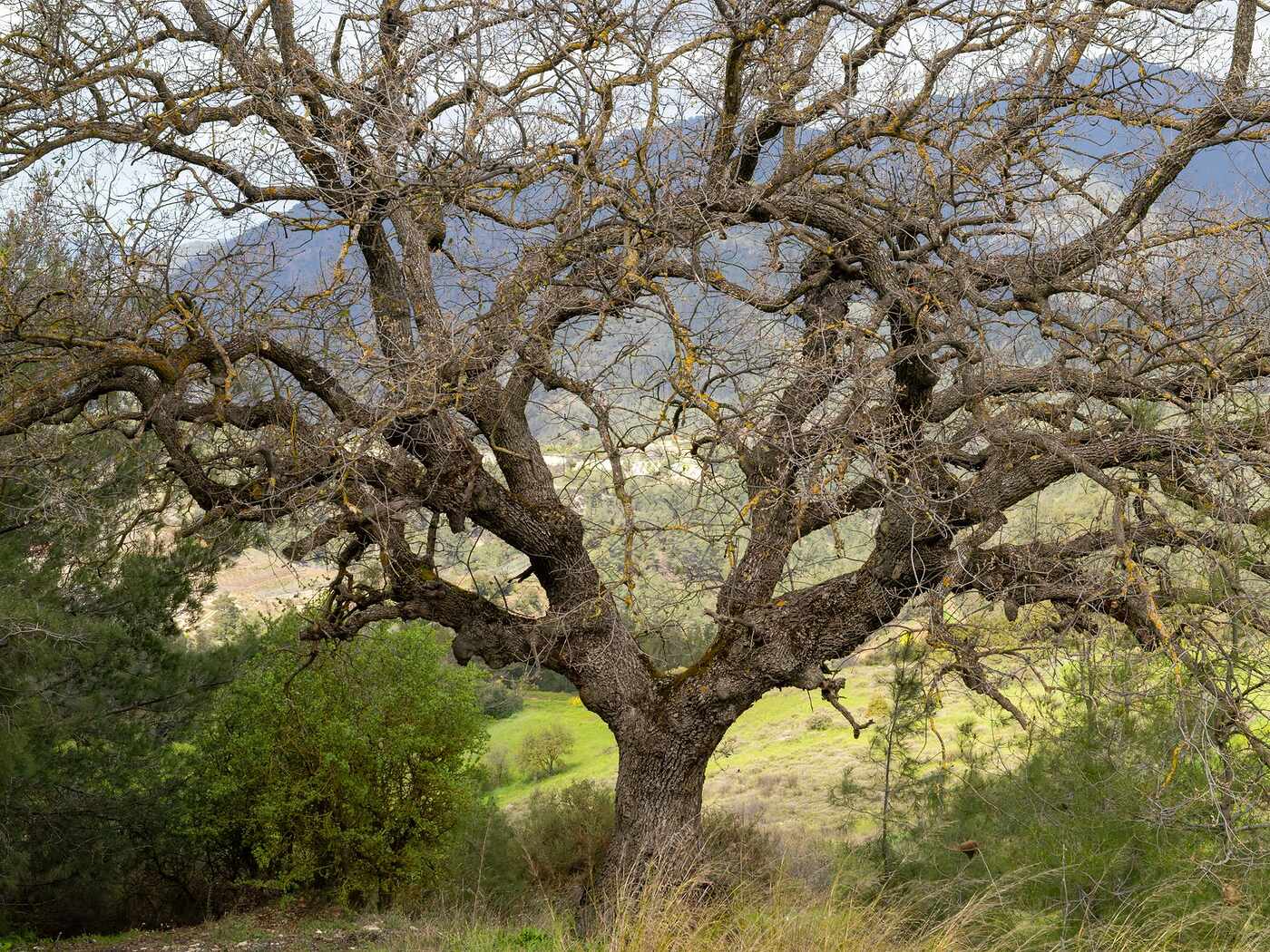
El Dorado Hills is newer housing built into oak-covered foothills, with open grassland and woodland on most boundaries. The buildings are tight and the surroundings are not, which shapes the whole job.
- Oak foothill boundaries
- Mostly post-1990 slab housing
- Free inspection, no obligation
Free Inspection in El Dorado Hills
The free inspection in El Dorado Hills is a short list on the building and a careful look at the boundary. On a newer hillside house the walk covers the garage doors and thresholds, the stucco penetrations around pipes and vents, the roof returns and valleys, the gable vents, the roof-mounted HVAC penetrations, and the attic. Then the perimeter, because on a lot that backs onto woodland or grassland the cover at the fence line is the real variable.
El Dorado Hills is in El Dorado County, roughly twenty-five miles east of downtown Sacramento and the furthest point on this service area. The line is open around the clock and the inspection day runs 7am to 7pm, weekends included. The visit costs nothing. Book it from the contact page.
Oak woodland and grassland on the boundary
El Dorado Hills was developed into the Sierra foothills rather than onto cleared ground, which is why the oaks and the open grassland are still there between and around the subdivisions. That is the area's defining quality and it is also a permanent rodent reservoir on a great many property boundaries.
Two species use it in different ways. Open grassland and woodland floor is ground habitat, and UC IPM places Norway rats at ground level and below, usually in burrows, with a nightly range of roughly 100 to 500 feet around the nest. The oaks are the climbing route: UC IPM describes roof rats living in attics, wall voids and ceiling voids and traveling up to 300 feet or more to feed, and a heavy low limb reaching a roof delivers one to the eave whatever decade the house was built.
None of that ground can be treated, and saying otherwise would be dishonest. What can be changed is the building and the cover you own: the fence line planting, a shed on bare soil, a woodpile against a wall, and ivy or climbing cover on a garden structure, which UC IPM names among the conditions conducive to roof rat foraging.

Newer housing, short lists, and the hillside factor
Most El Dorado Hills housing dates from the 1990s onward and is slab-on-grade, which removes the crawl space and with it the foundation vents, the access door and the underfloor penetrations. The opening list is overhead and at the garage, and on a typical house it runs to four or six items rather than a dozen. That should be visible in the price, and the itemized list is the way to check.
Hillside building adds two wrinkles. Split-level and stepped construction produces more roof planes, more valleys and sometimes a partial underfloor void on the downhill side, each of which is another item to find and close. And sloped lots mean retaining walls, terracing and drainage runs, which create cover and harborage at the base of a building where a flat lot would have none.
Larger houses on larger lots are common here, and the arithmetic follows: more elevation means more openings, and sealing is priced per opening. A long list on a big hillside house is legitimate; a single figure with no list behind it is not.
What We Handle in El Dorado Hills
El Dorado Hills jobs are mostly exclusion and trapping against continuous outside pressure.
- Rodent exclusion: the garage doors, the stucco penetrations, the roof returns and valleys and the gable vents, itemized
- Roof rat removal: the oak woodland call, with the attic runs trapped and the limbs identified
- Norway rat removal: burrows in cover at a woodland or grassland boundary, or behind a retaining wall
- Mouse removal: garages and kitchens, sealed to a quarter-inch standard rather than a half
- Rodent inspection: the free walk of the envelope and the boundary
- Attic cleanup: cleared and sanitized once the trapping has finished, space by space
- Rodent clearance letters: written reports for a sale, regularly requested on this stock
A Typical El Dorado Hills Job
The situation: A 1999 split-level house on a sloped lot backing onto oak woodland, with a terraced garden and a retaining wall near the house. Movement over the lower-level ceiling from late September, droppings along the garage wall plate, and owners who had assumed a house of that age would be sealed.
What gets done: The survey runs to eight items, two of which the split level created: a partial underfloor void on the downhill side with an unscreened opening, and a roof valley junction where a lower roof meets an upper wall. Add a lifted garage door corner, three stucco penetrations, a brittle gable vent screen and a gap behind a dryer vent. Outside, burrows in the cover behind the retaining wall and an oak limb a foot from the lower roofline. Six openings with no traffic close first; traps work the attic run, the garage and the burrow mouths.
How it turns out: Four visits across about three weeks. The underfloor void and the valley junction close after two empty checks, the burrows are collapsed and backfilled, and the attic droppings are cleared from two bays. The oak limb went to a tree service and the planting behind the retaining wall was cut back. The quote listed the eight openings, the trapping and the attic clearance separately.
What This Costs in El Dorado Hills
The bands here are national figures from published guides, labeled as national, because no California city publishes a rodent cost survey. They describe the stages; the free inspection prices the building.
| Stage | Typical national band | Source |
|---|---|---|
| Sealing the building | $500 to $2,500 | HomeGuide 2026 |
| Trapping and removal | $250 to $1,200 | HomeGuide 2026 |
| Inspection on its own | $0 to $175 | HomeGuide 2026 |
| Attic cleanup and decontamination | $600 to $2,500 | HomeGuide 2026 |
| Follow-up visit | $50 to $150 | Angi, national |
A newer house with a six-item list should sit in the lower half of the sealing band. What lifts an El Dorado Hills job is size and geometry rather than age: a large split-level with several roof planes has more openings, and a boundary onto woodland or grassland supplies animals continuously, so the exterior trapping takes more visits. Get the opening list and the follow-up count in writing and both become checkable.
What is moving inside the walls
How noise in a wall cavity gets traced.
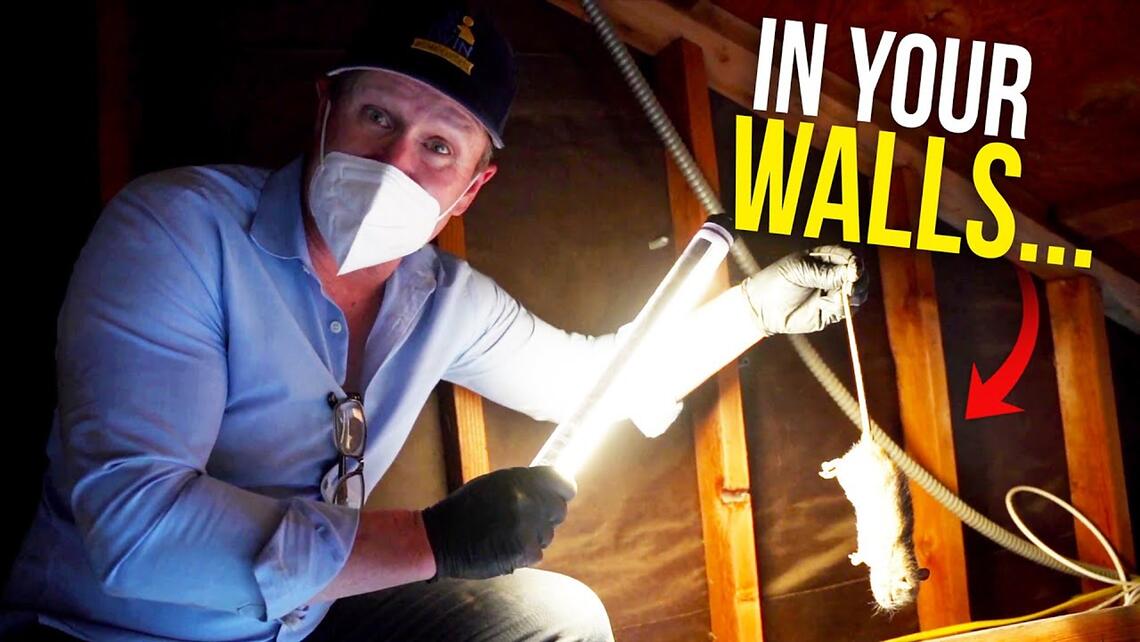
Video: Rodents in your walls? Here's what you do, from Twin Home Experts.
Common Questions in El Dorado Hills
The questions El Dorado Hills callers raise before they book.
My house is newer. Why is this happening?
Because the surroundings matter more than the build date. Oak woodland and open grassland on a boundary carry a resident rodent population, and UC IPM has roof rats traveling up to 300 feet or more to feed and Norway rats working 100 to 500 feet a night. What a newer house gives you is a short opening list, usually four to six items, rather than immunity. Closing those is what decides the outcome.
Can anything be done about the woodland behind me?
The habitat stays, and that is the straight answer. What is within your reach is the building and the cover you own: the garage door corners, the stucco penetrations, the roofline items, and the planting, sheds, woodpiles and terracing that give an animal somewhere to work at the base of a wall. UC IPM lists ivy, star jasmine and honeysuckle among the conditions conducive to roof rat foraging, so climbing cover on a garden structure is worth removing.
Does a split-level change the job?
It adds items. Stepped construction produces more roof planes and valleys, and on the downhill side it sometimes produces a partial underfloor void that behaves like a small crawl space and needs screening. Retaining walls and terracing add cover at the base of the building. None of it is difficult; it means the list is longer than on a flat-lot house of the same age, and the list is what the quote rests on.
Is the drive from Sacramento a problem?
El Dorado Hills is about twenty-five miles east of downtown, which is the furthest point on this service area and still well inside it. Somebody is on the phone at all hours, with inspections slotted between 7am and 7pm any day with the contractor covering El Dorado County. Licensing is statewide in any case: the company must be registered with the Structural Pest Control Board and licensed in Branch 2, verifiable on the Board public lookup.
Nearby Areas We Serve
The contractors covering El Dorado Hills work the neighboring towns as well, across El Dorado County and the wider Sacramento metro.