Commercial Rodent Control in Sacramento, CA
A kitchen, a warehouse or an apartment building needs the openings closed and the visits documented, because somebody is going to ask to see the file. Exclusion-led work with paperwork that holds up.
- Documented visits
- Exclusion-led programs
- Free site inspection
What commercial rodent control in Sacramento covers
A commercial job is the residential sequence with a record-keeping obligation attached. The site is surveyed, the openings are listed, the quiet ones are closed, the active runs are trapped, and the remainder is sealed once the activity stops. What changes is the documentation: each visit is recorded, the findings and the actions are written down, and the file is available when a health inspector, a landlord, a franchisor or an insurer asks for it.
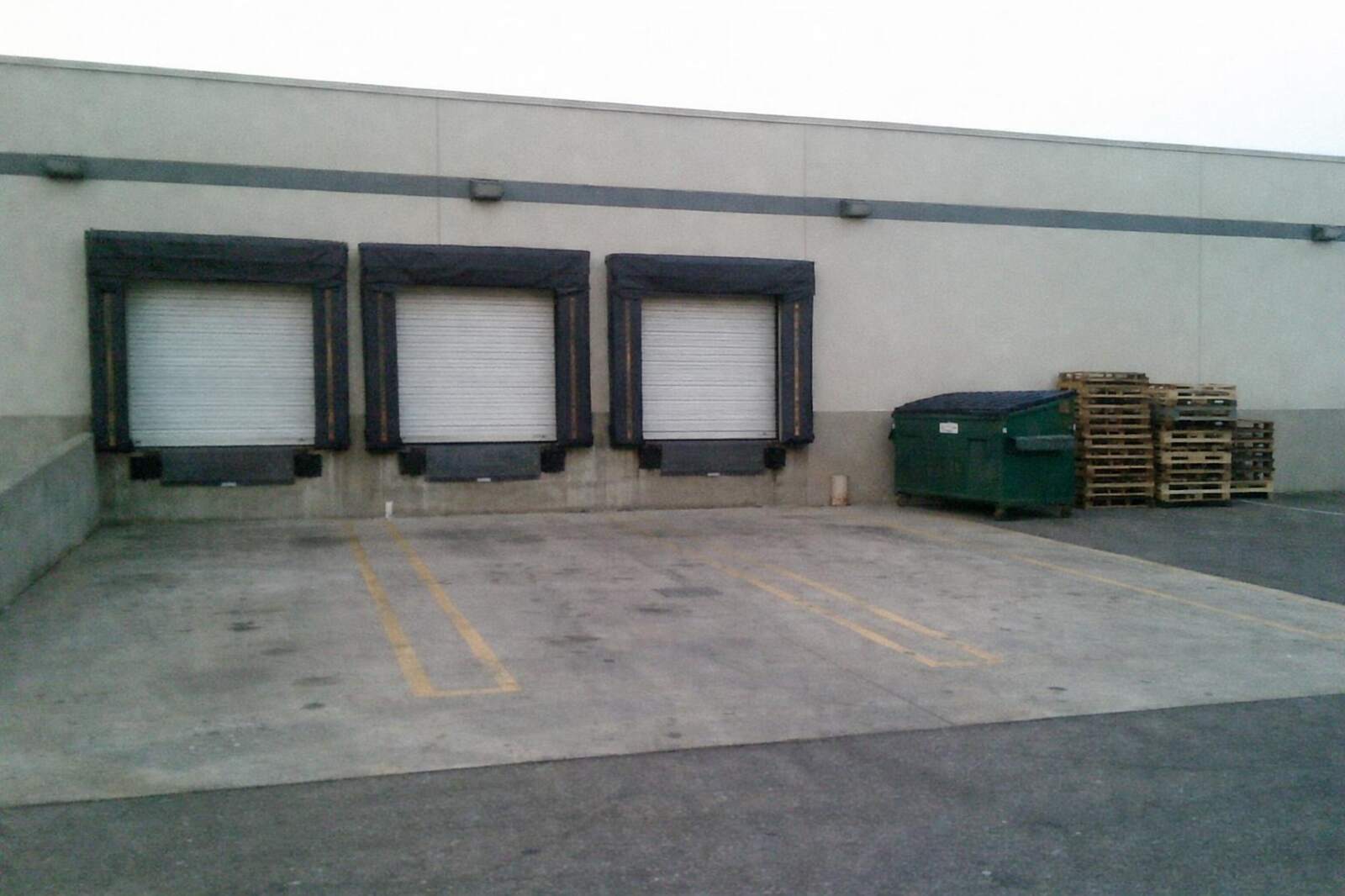
The survey also widens. A commercial building has delivery doors that stand open, dock levelers with gaps under them, utility penetrations in quantity, dumpster enclosures, pallet storage against walls, drop ceilings and a grease interceptor outside, and each of those is both an entry and a harborage question.
- Full site survey, with openings and harborage listed separately
- Exterior and interior trapping programs, documented per visit
- Dock doors, utility penetrations, vents and roof access closed in steel
- Harborage reduction advice: pallet spacing, dumpster management, vegetation
- A visit file with findings, actions and dates, kept current
- Itemized quoting across sealing, trapping and ongoing monitoring

The property types this covers
Restaurants and food service come first, because the consequences land fastest. A kitchen has heat, food and water in one place, with a grease interceptor outside and a dumpster enclosure nearby, and an inspection finding is a business problem within hours rather than a maintenance item.
Warehousing and light industrial sit at the other end of the scale. Large envelopes, dock doors that spend the day open, pallet racking against walls and a perimeter measured in hundreds of feet. The work there is mostly exclusion at the dock and harborage management inside, and the trapping follows the product flow.
Apartment buildings and multifamily are the third category and the most delicate, because the units are occupied and the sealing has to happen around people. Offices, schools, churches and retail fill out the list, generally with smaller problems and the same documentation requirement. On each of them the work is exclusion-led, because a commercial building that is never closed is a commercial building on a permanent service contract.
Why Sacramento commercial sites see Norway rats
Ground rats follow infrastructure, and this city has a lot of it. Sacramento sits at the confluence of two rivers behind extensive levees, and Norway rats are described locally as traveling those levees into garages and crawl spaces, heaviest from fall through spring when winter rain floods the bank burrows out. A commercial site near the river, near the rail corridor or next to an undeveloped parcel inherits that pressure whatever its own housekeeping looks like.
UC IPM puts a Norway rat at ground level and below, usually in burrows, with a nightly range of 100 to 500 feet. On a commercial parcel that range takes in the neighboring lot, which is why exterior work at the property line matters as much as the interior program, and why a single-tenant approach in a shared center rarely holds.
Roof rats appear too, particularly where mature trees or a landscaped berm reach a roofline, and on a flat commercial roof the route in is usually a utility penetration or a rooftop unit curb rather than an eave. Both species on one site is common, and the two need different trap placement.
What happens when the county gets involved
Sacramento County Environmental Management inspects rodent complaints and can issue abatement notices, and that is the route by which a commercial property most often ends up needing documented work on a deadline. A notice is a compliance matter with a date on it, and the file of visits is what demonstrates action.
It is worth being precise about the agencies, because the names get confused. The Sacramento-Yolo Mosquito and Vector Control District is mosquito-focused and does not carry out residential or commercial rat removal. County Environmental Management is the rodent complaint and abatement route. Neither of them does the work; a registered pest control company does.
For food facilities, the documentation a health inspector expects is a current service record showing dates, findings and corrective actions, plus evidence that structural openings are being closed rather than monitored indefinitely. A file of bait station checks with no exclusion line in it is the weakest version of that, and it is the version that attracts follow-up.
Do I need an ongoing contract?
For a food facility or a multi-tenant building, usually yes, and the honest reason is documentation rather than chemistry: somebody will ask to see a current service record. For a single-tenant office or a small retail unit, often no, and a one-off exclusion job with a follow-up inspection is enough.
What to avoid is the version with no exclusion in it. A monthly charge for exterior stations, running for years with no openings closed, is the arrangement homeowners and facility managers complain about most, and it is also the weakest file to hand an inspector. A good program has a finite sealing scope at the start and a monitoring schedule afterward, which is a different shape from a perpetual treatment plan.
What commercial work costs, and why we quote per site
No city-level rodent cost survey is published for Sacramento, and the national bands below are residential figures, so they give you the shape of the individual stages rather than a commercial price. A commercial quote is built per site from the perimeter length, the number of openings, the interior footprint and the visit frequency.
| Stage | Typical national band, residential | Source |
|---|---|---|
| Trapping and removal | $250 to $1,200 | HomeGuide 2026 |
| Exclusion sealing, whole building | $500 to $2,500 | HomeGuide 2026 |
| Cleanup and decontamination | $600 to $2,500 | HomeGuide 2026 |
| Full-scope restoration, worst case | $3,000 to $10,000 and up | HomeGuide 2026 |
| Follow-up visit | $50 to $150 | Angi, national |
Three things move a commercial figure. Perimeter length, because sealing is priced by the opening and a long envelope has more of them. Access, since roof-mounted units and ceiling voids need equipment and out-of-hours working. And occupancy, because a kitchen that can only be worked between midnight and 5am costs more than one that closes for two days. Ask for sealing, trapping and monitoring as three separate lines so the ongoing cost is visible on its own.
Where California law leaves bait on a commercial site
The restrictions are statewide and they matter here. AB 1788 suspended second-generation anticoagulant rodenticides across California in 2020. AB 1322 added diphacinone from January 2024. AB 2552, the Poison-Free Wildlife Act, extended the suspension to chlorophacinone and warfarin from January 2025, with exemptions for public health and agricultural use. UC IPM lists bromethalin, cholecalciferol and zinc phosphide as the active ingredients that remain registered.
The practical position on a commercial site is that trapping and exclusion carry the program, and any product use is specific, placed and recorded rather than routine. Ask what is being used, where, and under which exemption if one is claimed, and expect it to appear in the file.
There is a secondary reason to prefer trapping in a food facility. The EPA puts death at four days to two weeks after an animal starts feeding on anticoagulant bait, and an animal that dies inside a ceiling void above a prep line is a far worse problem than the one you started with.
What to check before signing a commercial program
Start with the company registration. A company inspecting for rodents, trapping them or applying bait for hire in California must be registered with the Structural Pest Control Board and licensed in Branch 2, which covers household pests and rodents, and the registration can be confirmed on the Board public lookup. Every contractor routed through this line holds it. Structural repair to chewed framing or a dock surround moves into Branch 3 or a CSLB-licensed contractor, so establish who is doing it.
Then read the program document for four things. A finite sealing scope with the openings itemized, which is what separates a program from a subscription. The visit frequency and what is recorded at each visit. Who holds the file and how you get a copy when an inspector asks. And what is being placed on site, given the California restrictions.
Insurance certificates, the hours work can be carried out, and who is responsible for harborage items such as pallet spacing and dumpster management are all worth settling in writing at the same time. Some companies in this area publish one-year and two-year terms on sealing work; ask what the wording covers on a commercial envelope, which is a different proposition from a house.
Services that run alongside this one
Most Sacramento jobs move through two or three stages, and these pages cover the steps either side of this one.
- Rodent Exclusion: Closing foundation vents, crawl space doors, gable vents and eave gaps in steel and sheet metal.
- Norway Rat Removal: The ground and burrow rat off the levees and out of crawl spaces, trapped and shut out at grade.
- Rodent Clearance Letters: A written report of what was checked and found, for a sale, a lease or an insurance file.
How the stages fit together is set out on the about page, and the line is open at any hour if you would rather ask.
Pest control in a food premises
The standard a commercial kitchen is held to.
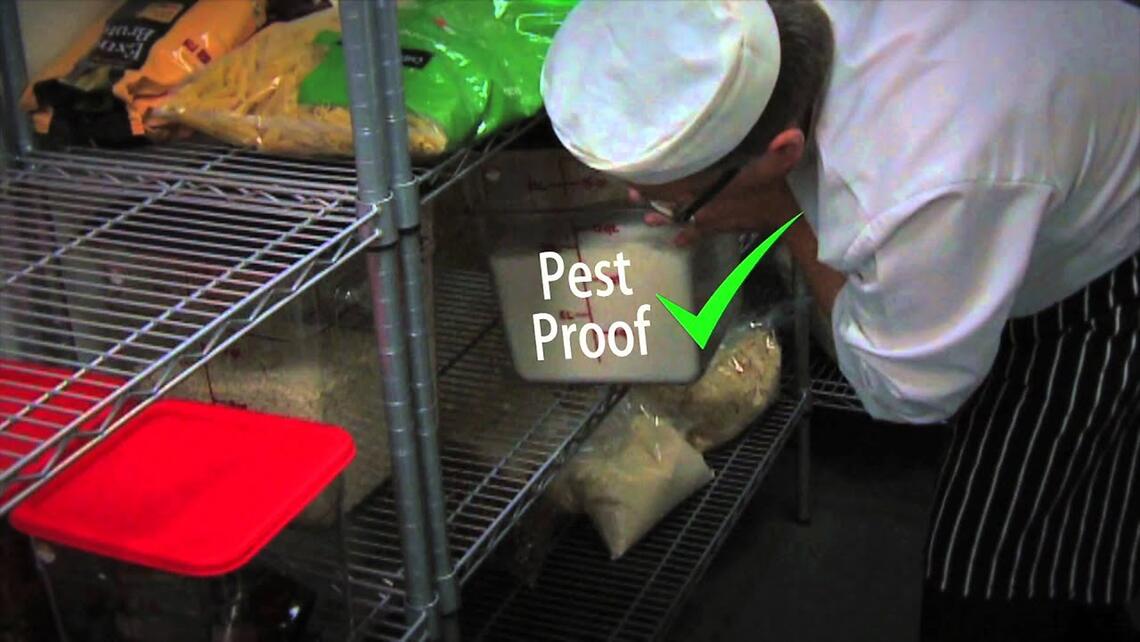
Video: Food safety coaching: pest control, from Food Standards Agency.
How a commercial program is set up
Five steps, with a finite sealing scope at the front of it.
-
Free site inspection
The perimeter, the dock, the roof, the interior and the harborage walked and photographed, with openings and harborage listed as separate schedules.
-
A sealing scope with an end
Every opening itemized with a proposed closure and a price, so the structural work is a defined project instead of an indefinite line on a monthly invoice.
-
Trapping around the operation
Exterior and interior trapping placed to the runs and to the product flow, scheduled around trading hours, and recorded at every visit.
-
Close and document
The remaining openings sealed once activity stops, with the closures listed and photographed for the file a health inspector or a landlord will ask to see.
-
Monitoring at an agreed frequency
A visit schedule with findings and actions recorded each time, priced separately from the sealing so the ongoing cost stays visible.
Ready to start? Call (916) 644-8455 or Book a Free Inspection.
What a commercial program has to deliver
Three things that separate a program from a subscription.
A sealing scope that finishes
The structural work is a defined list of openings with closures and a price, carried out and signed off. A program whose only permanent feature is a monthly charge has inverted the job: monitoring is the thing that continues, and closing the building is the thing that ends. On a long commercial envelope that list can be substantial, which is exactly why it belongs in writing.
HomeGuide puts residential whole-building exclusion at $500 to $2,500; a commercial envelope is priced per opening.
A file somebody else can read
Dates, findings, corrective actions, photographs of closures, and the company registration. That is what a health inspector, a franchisor, a landlord or an adjuster asks for, and it is what demonstrates action against a county abatement notice. A log of station checks with no structural work in it is the weakest version of the same file.
Sacramento County Environmental Management inspects rodent complaints and can issue abatement notices.
Methods that suit an occupied building
Trapping carries the program, because an animal that dies in a ceiling void above a prep line turns one problem into a worse one, and because California has suspended most of the old anticoagulant chemistry anyway. Any product use is specific, placed, and written into the record rather than applied as routine.
The EPA puts death four days to two weeks after an animal starts feeding on anticoagulant bait.
What Reddit Says About Commercial Rodent Control in Sacramento
Facility managers and restaurant operators who discuss this online are blunt about the main failure: a national contract that produced a monthly invoice, a clipboard and a row of exterior bait stations, and no structural work in three years. The advice that follows is consistently to separate the sealing from the monitoring and to buy the sealing as a project with a defined scope.
The red flags they name are specific to commercial work. No roof inspection. No dock door survey. A service record that lists stations checked and nothing else. A technician who changes every visit and never reads the previous notes. Pressure to sign a multi-year agreement before any survey has happened. And harborage advice that never appears in writing, so nobody owns the pallet spacing.
The questions they recommend are about the documents. Is the sealing scope itemized, and does it have an end. What exactly gets recorded at each visit, and can I get the file on request. Who is the named technician. What products go on site, given the California restrictions. And what happens to the price when the sealing is complete.
Several threads from operators dealing with a county notice make the same point: what satisfied the inspector was evidence of structural work with dates and photographs, rather than a longer history of monitoring. A few note that the neighboring lot was the real source and that the useful conversation was with the landlord about the shared perimeter.
The survey that produces the itemized scope is free, which makes that conversation easier to start.
A typical commercial call in the older industrial belt
The situation: A food production unit in a multi-tenant light industrial building near the rail corridor, with an undeveloped parcel behind the back fence. Droppings found on a shelf near the packing bench during an internal audit, and a county complaint already logged by a neighboring tenant. The operator had a national monitoring contract with eighteen months of station checks in the file and no structural work in it at all.
What gets done: The survey lists twenty-three items: a dock leveler with a gap along its full width, four utility penetrations through the rear wall, two roof unit curbs with failed sealant, a personnel door with no sweep, and a run of burrows along the back fence line. The gap under the leveler, the penetrations and the door sweep go in first. Trapping runs along the rear wall, inside the packing area and at the burrow mouths, worked between shifts and recorded each visit.
How it turns out: Five weeks to clear, with the last two wall penetrations closed after two empty checks and the fence-line burrows collapsed. The file handed to the county carried dates, findings, actions and photographs of every closure. Monitoring continued monthly at a lower figure than the old contract, and the operator took the shared-perimeter question to the landlord, which is where it belonged.
Commercial questions Sacramento operators ask
What comes up when a notice or an audit is involved.
Will this satisfy a health inspector or a county notice?
What satisfies them is a current record showing dates, findings, corrective actions and evidence that structural openings are being closed. Sacramento County Environmental Management inspects rodent complaints and can issue abatement notices, and a file of station checks with no sealing line in it is the weakest response to one. The program here is built so that the closures are itemized and photographed, which is the part that demonstrates action.
Can the work happen outside trading hours?
Usually, and for a kitchen it often has to. The phone is answered 24 hours a day, every day, so scheduling around a service window is straightforward to arrange, and the site survey establishes which items need out-of-hours access. Out-of-hours working affects the price, so it is worth settling before the quote is written rather than after.
The source is the lot next door. What can be done from my side?
Close your own envelope and manage your own harborage, which is more effective than it sounds. UC IPM gives a Norway rat a nightly range of 100 to 500 feet, so a neighboring parcel will keep supplying pressure, and the only thing inside your control is whether that pressure finds a way in. The survey documents the external source, which is also the evidence to take to a landlord or a property manager about the shared perimeter.
Do you use bait on commercial sites?
Trapping and exclusion carry the program. California has suspended the second-generation anticoagulants under AB 1788, added diphacinone under AB 1322 and extended the suspension to chlorophacinone and warfarin under the Poison-Free Wildlife Act, leaving bromethalin, cholecalciferol and zinc phosphide as the registered actives per UC IPM. Any product use on a commercial site is specific, placed and recorded in the file rather than routine, and an animal dying in a ceiling void above a prep line is a reason to prefer traps regardless of the law.
How long does a commercial program take to get clear?
Most sites take weeks rather than days. HomeGuide puts trapping between two to three days for a handful of animals and one to two months where an infestation is established, and a commercial envelope with a long perimeter sits toward the longer end because the sealing is staged around the trapping. The sealing scope is what gives it an end date, which is why it is priced as a project with a defined list.