Rodent Removal in Carmichael, CA
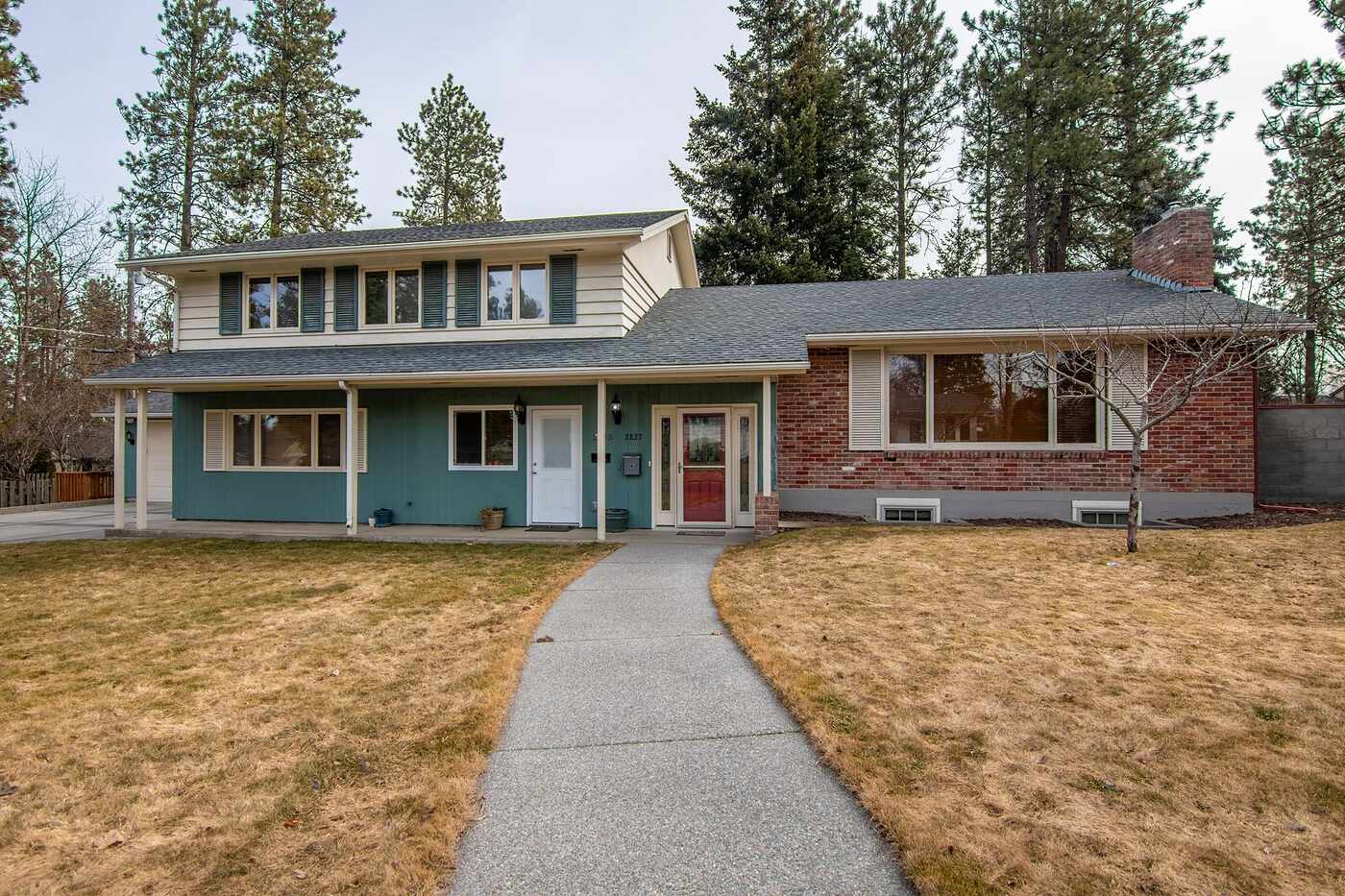
Carmichael puts mid-century houses on unusually large, wooded lots, with valley oaks spreading over the rooflines and the American River Parkway on the south side. Roof rats have the run of it.
- Heavy valley oak canopy
- Large wooded lots
- Free inspection, no obligation
Free Inspection in Carmichael
The free inspection in Carmichael spends as much time on the trees and the garden as on the building, because that is where the problem starts here. The walk covers the foundation vents and the crawl space door where the house has them, the garage threshold, the gable vents and eave junctions, then the attic, then which oak limbs make contact with the roof and what cover sits against the foundation.
Carmichael is unincorporated Sacramento County, roughly ten miles northeast of downtown, which makes it one of the closest areas on this list. Calls are taken at any hour, and the inspection window is 7am to 7pm across all seven days. Nothing is charged for the visit and the opening list is yours to keep. Book it here.
Valley oaks, and what a spreading limb does
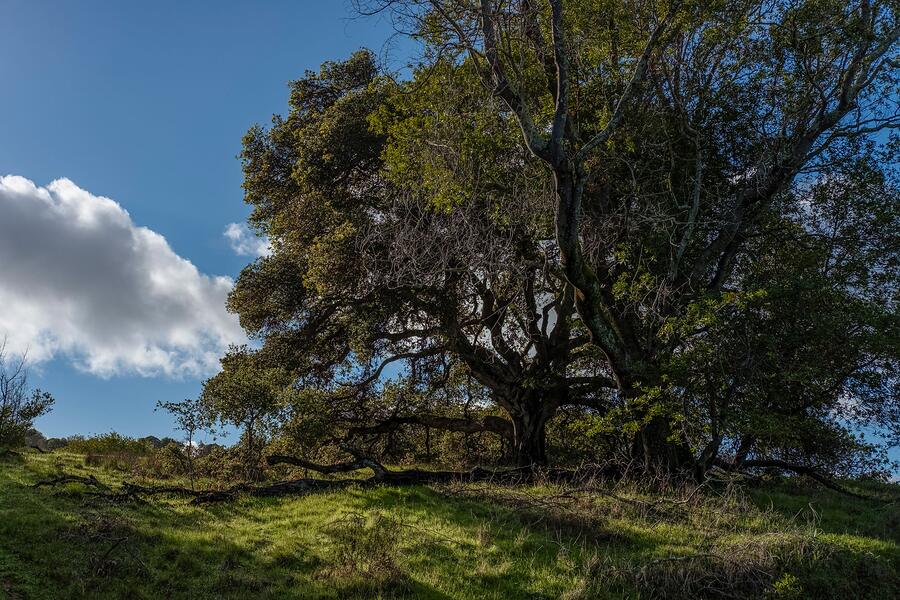
Carmichael carries some of the heaviest mature tree cover in the Sacramento area, and much of it is valley oak: a tree that grows very large and spreads horizontally, with heavy low limbs reaching well out from the trunk. On a typical Carmichael lot that means limbs passing directly over or against a roof, often from a tree standing a good distance from the house.
For a roof rat that is the whole route. UC IPM describes them as climbers that live in attics, wall voids and ceiling voids, traveling up to 300 feet or more in search of food, so a single oak can serve a whole block and a limb touching a ridge delivers an animal straight to the eave. The citywide picture supports it: the Sacramento urban forest plan counts roughly a million trees and about 19 percent canopy cover, with 35 percent targeted by 2045, and the established river-corridor neighborhoods carry far more than the average.
The remedy is not the tree. Cutting limbs back clear of the roof removes the route and leaves the oak alone, and on a protected or otherwise valuable tree that matters. The inspection names the limbs that make contact and puts it in writing.
Big lots, outbuildings and the parkway edge
Lot sizes in Carmichael are generous by metro standards, and a large garden brings its own conditions: sheds and workshops sitting on bare soil, decking with an open skirt, woodpiles, compost, chicken coops, and long runs of fence with planting grown up against them. Every one of those is cover at ground level, and cover is what a rodent needs before it needs an opening.
The American River Parkway runs along the southern side of Carmichael, with Ancil Hoffman Park and the river beyond, which adds ground rat habitat to the picture. UC IPM gives a Norway rat a nightly range of 100 to 500 feet, so a house within a couple of blocks of the parkway gets that pressure, heaviest from fall through spring when winter rain floods bank burrows out.
So a Carmichael job frequently has two halves: roof rats overhead off the oaks, and ground rats underneath off the parkway and the outbuildings. They need different trap placement and different parts of the opening list, which is why the inspection covers the whole building rather than the level somebody reported.
What We Handle in Carmichael
Carmichael jobs usually involve the canopy, the ground, or both at once.
- Roof rat removal: the dominant call, with the attic runs trapped and the oak limbs identified
- Rodent exclusion: gable vents, eave junctions, foundation vents, the crawl space door and the garage threshold
- Norway rat removal: ground activity off the parkway, under outbuildings and along fence lines
- Rodent inspection: the free walk that reads the trees as well as the building
- Attic cleanup: droppings and nesting cleared after the trapping, wetted before removal
- Attic insulation replacement: where a winter of traffic has flattened and soaked the material
- Dead rodent removal: an odor traced to a cavity and the route in closed behind it
A Typical Carmichael Job
The situation: A 1955 single-story house on a third of an acre, with two large valley oaks over the back garden and a workshop shed on bare soil near the fence. Movement over the back bedroom after dark from late September, and a separate scraping under the floor nearer the kitchen that the owners had put down to the same animal.
What gets done: Two problems, as the walk makes clear. An oak limb rests on the rear roof slope and the gable vent eight feet along has a screen torn at one corner, with rub marks and droppings in three attic bays below it. Under the floor, a burrow driven in beneath the shed and a second at the rear foundation wall, with two failed foundation vents. Traps go along the attic run, at both burrow mouths and inside the crawl space. The failed vents and two underfloor penetrations close on the first visit.
How it turns out: Five visits over about four weeks, because two species takes longer than one. The gable vent is rescreened and the crawl space door refitted after the checks come up empty, the burrows are collapsed and backfilled, and the attic droppings are cleared. The owners had the oak limb cut back and moved the woodpile off the fence line, and the shed went onto a concrete pad the following spring.
What This Costs in Carmichael
What follows is national cost data, labeled as such, because no California city publishes a rodent cost survey and a Carmichael figure would be made up. Treat the bands as the shape of each stage and the free inspection as the thing that prices your house.
| Stage | Typical national band | Source |
|---|---|---|
| Trapping and removal | $250 to $1,200 | HomeGuide 2026 |
| Sealing the building | $500 to $2,500 | HomeGuide 2026 |
| Attic cleanup and decontamination | $600 to $2,500 | HomeGuide 2026 |
| Insulation removal and replacement | $2.50 to $5.50 per square foot | HomeGuide 2026 |
| Full-scope restoration, worst case | $3,000 to $10,000 and up | HomeGuide 2026 |
Carmichael jobs tend to run toward the upper half of the trapping and sealing bands, for two reasons that are specific to the area. A raised foundation adds the whole underfloor list, and a job with both a climbing species and a ground species needs more visits than one with either alone. Tree work sits outside all of these figures and is usually the cheapest thing on the remedy.
The route in from the sewer line
How a rat travels a drain into a house.
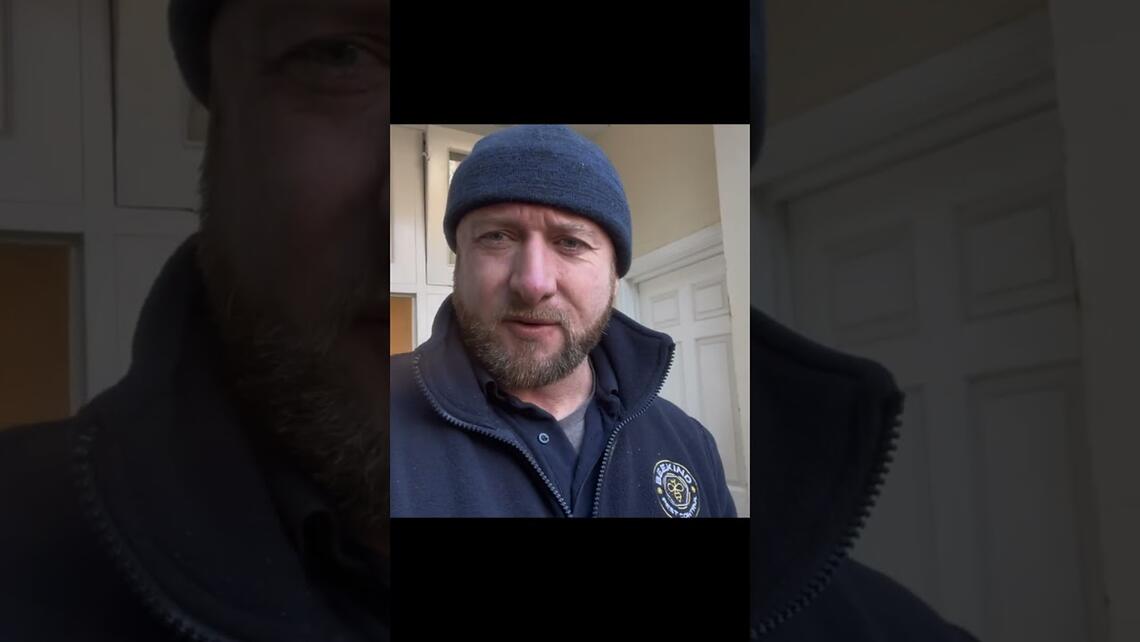
Video: How do rats get out of the sewers and into your home?, from BEEKIND Pest Control.
Common Questions in Carmichael
The questions Carmichael callers raise before they book.
Do I have to cut down the oak?
Almost never. What a roof rat uses is contact between a limb and the building, so cutting the limbs back clear of the roof removes the route while the tree stays where it is. That matters in Carmichael, where the oaks are large and often valuable. The inspection identifies which limbs make contact and records them in writing, and the tree work falls outside pest control entirely.
Why do I have noise overhead and under the floor?
Because you probably have two species. UC IPM places Norway rats at ground level and below, usually in burrows, and roof rats in attics, wall voids and ceiling voids. On a large wooded lot near the parkway both are available: the oaks deliver one to the eave and the ground cover and the river corridor supply the other. They need separate trap plans, which is why the walk covers the whole building rather than the level you reported.
Does the shed or the woodpile matter?
A great deal. Cover at ground level is what lets an animal work unobserved a few inches from a foundation vent, and a shed on bare soil is a roof over a future burrow. Moving a shed onto a pad, lifting a woodpile off the ground and clearing planting back from the wall are all free or nearly free, and they change what an inspection finds next year. UC IPM also names ivy, star jasmine and honeysuckle as conducive to roof rat foraging.
How quickly can somebody come out?
The number is staffed around the clock, with inspections scheduled anywhere between 7am and 7pm, weekends included. Carmichael is about ten miles from downtown, so it is a short drive for the contractors covering it. The dispatcher books the next open slot and the visit costs nothing.
Nearby Areas We Serve
The contractors covering Carmichael work the neighboring towns as well, across Sacramento County and the wider Sacramento metro.